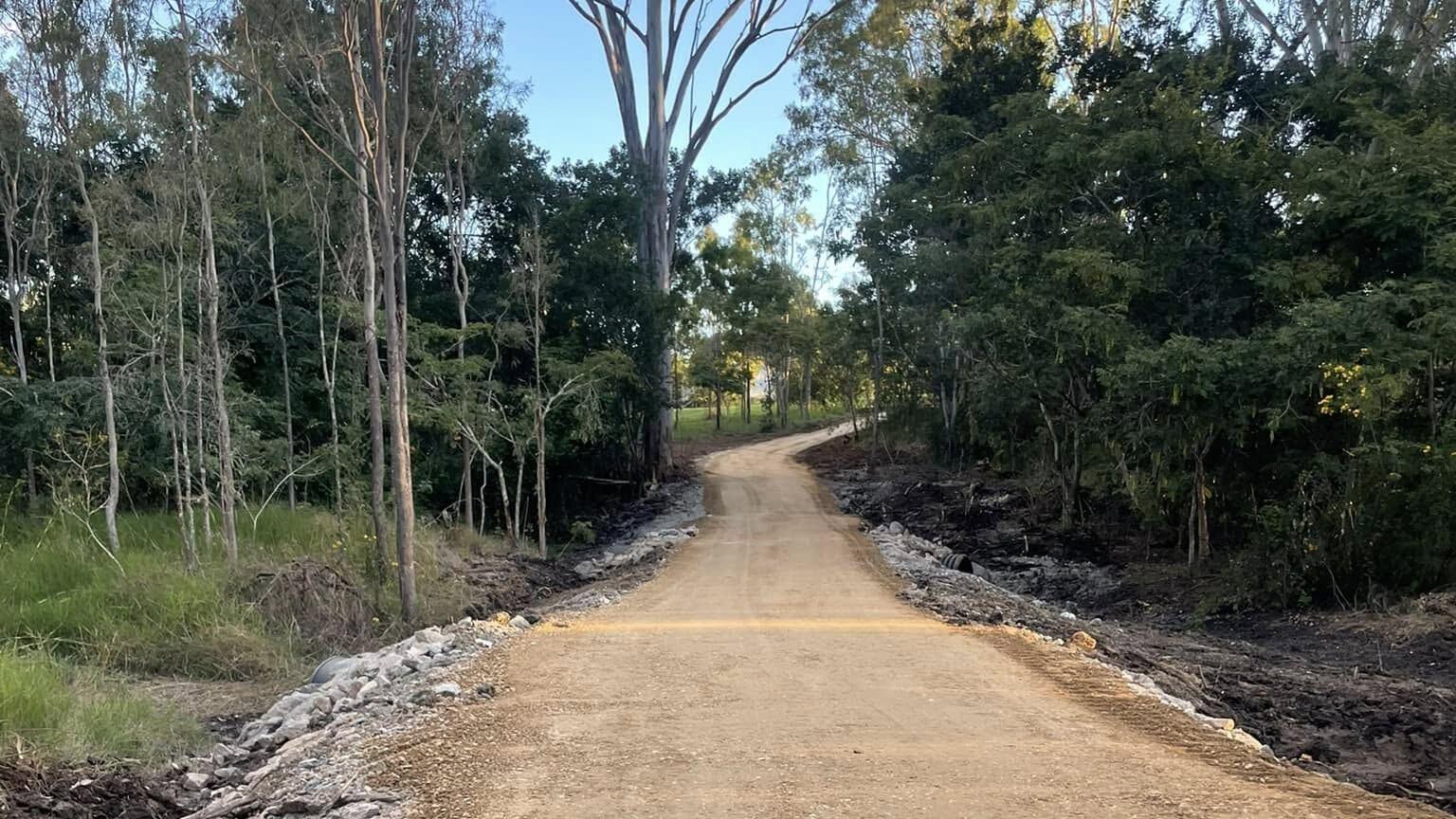
Start with the route and the vehicles
A driveway to a house has different requirements from access for a horse float, delivery truck or shed installer. Before measuring up, think about passing space, turning room and where vehicles need to stop. A route that looks short on a plan may still need substantial work if it crosses a slope or low point. Tell Rex what needs to get in and out, including occasional heavy deliveries.
The surface is only part of the job
The work below the gravel matters. Site preparation, the condition of the existing ground, suitable base material and compaction all affect the finished driveway. Rex assesses the required scope before giving a fixed quote. Where an existing track can be reused, the quote can focus on the sections that need work rather than assuming the entire route must be replaced.
Plan where the water will go
Driveway drainage needs to be considered along the whole route. Water crossing a track, collecting at a low point or running down a steep section can change the work needed. Surface shaping and drainage are considered together; culverts or other works depend on the site. Send photos taken after rain if available, without entering unsafe areas.
What to include in your enquiry
Provide the approximate length and width, your suburb, a few photos of the route and details of machinery access. Mention gates, bends, trees, existing services and where materials could be unloaded. If another contractor has plans for the site, include that information when Rex follows up. The online estimate is an initial guide; the written quote defines the work, inclusions and any exclusions.
New construction or a repair?
If the current driveway is broadly usable but has ruts or a washed-out section, a repair may be the better starting point. Repeated failures, a changed route or unsuitable access may require more extensive work. The repair page explains what to photograph so Rex can assess the condition before recommending a scope.